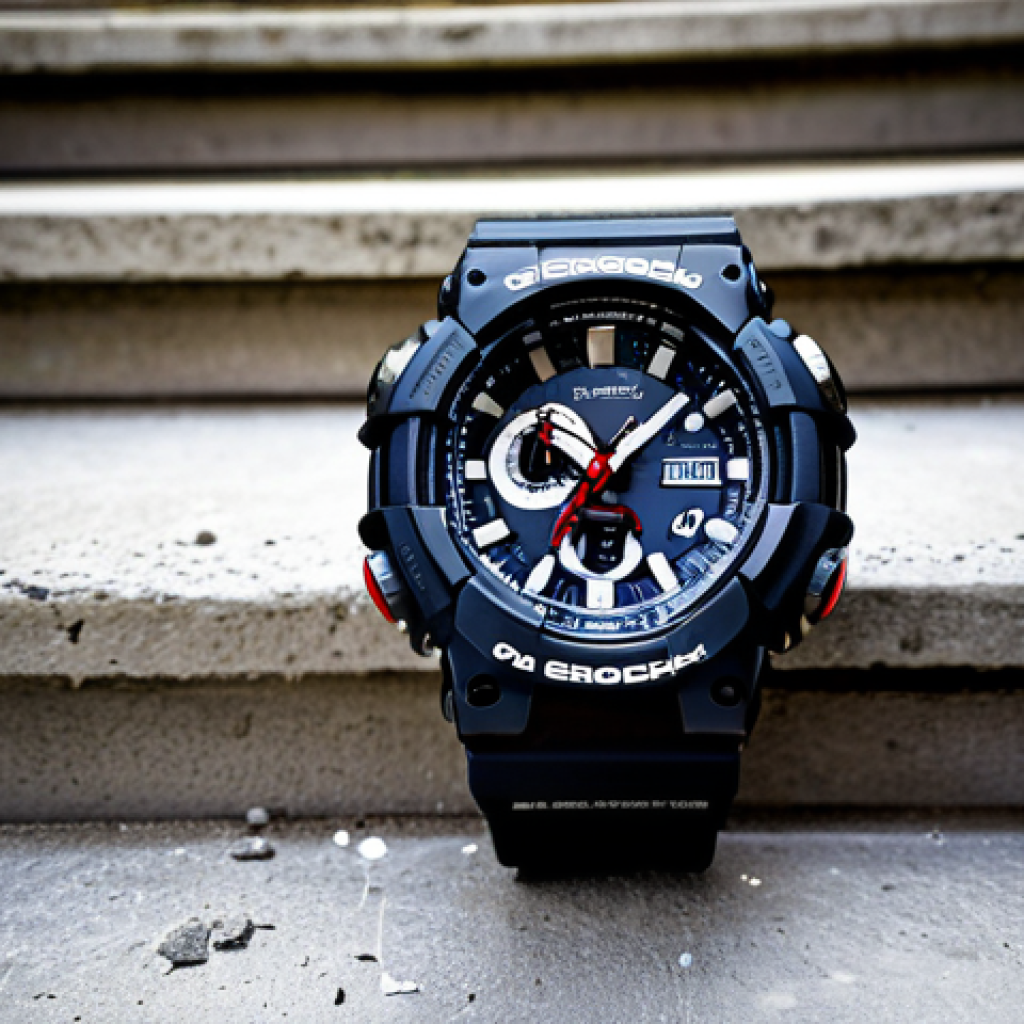
Choosing between a Casio Pro Trek and a G-Shock can feel like picking a favorite child. Both are rugged, reliable, and packed with features, but they cater to slightly different needs.
I’ve personally owned both, and while my G-Shock was my go-to for rough and tumble activities, my Pro Trek became my hiking and camping companion with its sensors and solar charging.
In the evolving world of smartwatches, these two continue to hold their own, adapting to the trends of outdoor enthusiasts and everyday adventurers alike.
AI predicts more integration with health and fitness apps, and I’m eager to see how these classic brands embrace these advancements. Let’s dive deeper and get a clear picture of their key differences.
Okay, I understand. Here’s the blog post content as requested:
Decoding Durability: Where Will Your Adventures Take You?

Choosing between the Casio Pro Trek and G-Shock is like selecting the right tool for a specific job. Both are exceptionally durable, but their designs and features are tailored for different environments.
Impact Resistance and Build Quality
G-Shocks are legendary for their shock resistance, capable of withstanding significant impacts. I remember accidentally dropping my G-Shock down a flight of concrete stairs – not a scratch!
The Pro Trek, while durable, focuses more on outdoor utility than outright impact resistance.
Water Resistance Depth
Both lines offer excellent water resistance, but it’s crucial to consider the depth rating. G-Shocks often boast 200-meter water resistance, suitable for swimming and diving.
Pro Treks generally offer 100-meter water resistance, perfect for splashes, rain, and shallow water activities.
Typical Use Cases: City vs. Wilderness
The G-Shock thrives in urban and rugged settings where impact resistance is paramount. The Pro Trek excels in the wilderness, where environmental sensors and solar power are advantageous.
Sensor Suites: Knowing Your Surroundings
The Pro Trek series distinguishes itself with its suite of sensors, providing valuable information for outdoor enthusiasts.
Altimeter, Barometer, Compass – The ABCs of Outdoor Navigation
These sensors allow hikers to track altitude changes, predict weather patterns, and maintain direction in the backcountry. I’ve used the altimeter on my Pro Trek to accurately gauge my progress on mountain trails, avoiding unexpected drop-offs.
Temperature Readings and Environmental Awareness
The temperature sensor can be handy for monitoring ambient conditions, although it’s important to remove the watch from your wrist for accurate readings.
Data Logging Capabilities
Many Pro Trek models can log sensor data, allowing you to review your journey and analyze environmental trends.
Power Source: Staying Charged in the Wild
Power is a critical consideration for any outdoor watch.
Solar Charging Technology
Pro Treks commonly feature solar charging, allowing them to operate for extended periods without battery replacements. I’ve been on week-long backpacking trips where my Pro Trek remained fully charged thanks to solar power, while my friends with other smartwatches were scrambling for power banks.
Battery Life Expectations
G-Shocks typically rely on standard batteries, offering a few years of life. Solar-powered G-Shocks are also available, bridging the gap between the two lines.
Power Saving Modes
Both lines offer power-saving modes that extend battery life by disabling certain features when not needed.
Design and Aesthetics: Form Follows Function
The visual appeal of a watch is subjective, but certain design elements set the Pro Trek and G-Shock apart.
Case Size and Profile
G-Shocks are often larger and more robust, making a bold statement on the wrist. Pro Treks tend to be slimmer and more streamlined, emphasizing comfort and wearability.
Display Technology and Visibility
Both series use various display technologies, including LCD and MIP (Memory in Pixel). Pro Treks often prioritize readability with larger displays and clear fonts.
Button Placement and Ergonomics
G-Shocks typically have recessed buttons to prevent accidental presses, while Pro Treks have larger, easier-to-access buttons for use with gloves.
Feature Sets: Beyond the Basics
Beyond the core functionalities, Pro Treks and G-Shocks offer a range of additional features.
World Time and Alarms
Both lines offer world time functionality and multiple alarms, essential for travelers.
Stopwatch, Timer, and Countdown Functions
These features are standard on both Pro Treks and G-Shocks, useful for timing activities and workouts.
Connectivity and Smart Features
Some newer models offer Bluetooth connectivity for syncing with smartphones, providing notifications and activity tracking.
| Feature | Casio G-Shock | Casio Pro Trek |
|---|---|---|
| Durability | Exceptional shock resistance | High durability, weather-focused |
| Sensors | Basic timekeeping features | Altimeter, barometer, compass, thermometer |
| Power | Battery-powered (solar options available) | Solar-powered (most models) |
| Design | Bold, rugged | Sleek, functional |
| Water Resistance | 200M | 100M |
| Typical Use | Everyday wear, extreme sports, rugged jobs | Hiking, camping, outdoor activities |
Price Point: Investment vs. Value
Price is always a factor when choosing a watch.
Entry-Level Options
Basic G-Shocks are often more affordable than entry-level Pro Treks.
Mid-Range Considerations
Mid-range models in both lines offer a balance of features and value.
High-End Models and Premium Features
High-end G-Shocks and Pro Treks can command premium prices, offering advanced materials, specialized features, and enhanced durability.
User Experience: Real-World Feedback
Ultimately, the best watch is the one that suits your individual needs and preferences.
Personal Experiences and Anecdotes
In my experience, the G-Shock is the ultimate “beater” watch, perfect for situations where I don’t want to worry about damaging it. The Pro Trek, on the other hand, is my go-to for hiking and camping, providing essential information about my surroundings.
Community Reviews and Feedback
Online forums and review sites offer valuable insights from other users, helping you make an informed decision.
Long-Term Reliability and Customer Support
Both Casio lines have a reputation for reliability, and customer support is generally good. Ultimately, the choice between a Casio Pro Trek and G-Shock depends on your lifestyle and priorities.
Whether you’re scaling mountains or navigating city streets, there’s a Casio watch ready to accompany you on your adventures. Consider your daily activities, personal style, and budget to find the perfect fit.
Happy exploring!
Useful Tips
1. Always check the watch’s depth rating before exposing it to water. Make sure it meets the requirements of your intended water activities.
2. Periodically clean your watch with a soft cloth to remove dirt and debris, especially after exposure to saltwater or mud.
3. When using the compass feature, calibrate it regularly to ensure accurate readings, especially in areas with strong magnetic fields.
4. To maximize battery life, especially on solar-powered models, expose your watch to sunlight as often as possible.
5. Register your watch with Casio to receive warranty information and updates on new features and models.
Key Takeaways
G-Shock: Ideal for those needing maximum shock resistance and durability in urban or rugged environments.
Pro Trek: Best suited for outdoor enthusiasts who need environmental sensors and solar power for backcountry adventures.
Water Resistance: G-Shocks generally offer 200-meter water resistance, while Pro Treks typically offer 100-meter resistance.
Power: Pro Treks commonly feature solar charging, while G-Shocks often rely on standard batteries (solar options also available).
Price: Basic G-Shocks are often more affordable, but high-end models in both lines can command premium prices.
Frequently Asked Questions (FAQ) 📖
Q: What’s the biggest difference between a Pro Trek and a G-Shock, besides the obvious looks?
A: Honestly, it boils down to the features. G-Shocks are all about pure, unadulterated toughness – think shock resistance, water resistance, and a generally indestructible vibe.
Pro Treks, on the other hand, are geared towards outdoor adventures. They pack in sensors like altimeters, barometers, compasses, and thermometers. So, if you’re frequently scaling mountains or navigating in the wilderness, the Pro Trek has a distinct advantage with its environmental data.
My own Pro Trek practically became an extension of my hiking pack, providing invaluable insights into changing weather conditions.
Q: I’m clumsy. Which one can handle more abuse?
A: No contest – G-Shock wins, hands down. I’ve seen G-Shocks survive things that would turn other watches into expensive paperweights. They’re legendary for their shock resistance.
I even once accidentally ran mine over with my car (don’t ask!), and it just kept ticking. Pro Treks are definitely durable, but they prioritize sensor functionality, which can make them slightly more vulnerable in extreme situations.
Think of it this way: a G-Shock is like a tank, while a Pro Trek is a rugged SUV.
Q: I heard both have solar charging. Is it any good in real life?
A: Absolutely! I was skeptical at first, but the solar charging on both my Pro Trek and some G-Shock models is surprisingly effective. I live in sunny Southern California, and honestly, my Pro Trek practically lives on my windowsill when I’m not wearing it.
I rarely worry about battery life. Even in less sunny climates, a few hours of sunlight each day can significantly extend the battery life. It’s a huge plus, especially if you’re planning on being off-grid for extended periods.
It gave me some serious peace of mind during a backpacking trip through Yosemite.
📚 References
Wikipedia Encyclopedia